


Macular Degeneration Glasses: How Low Vision Aids Can Help
If you or someone close to you has been diagnosed with macular degeneration, you have probably searched for macular degeneration glasses in the hope of seeing clearly again. It is a natural thing to look for, and there is genuinely helpful technology out there, but it helps to know what these aids can and cannot do before you spend anything.
The honest starting point is this: no pair of glasses cures macular degeneration or brings back normal vision. What a well-chosen low vision aid can do is help you make the most of the sight you still have, so reading, hobbies and recognising faces become easier. This guide explains the main types of glasses and low vision aids, how they work, and how to find the right one, alongside the wider picture of managing macular degeneration.
Quick Overview
- Macular degeneration glasses are a loose term for a range of low vision aids, from stronger reading glasses to electronic magnifiers, that help you use your remaining vision.
- No aid restores normal vision or treats the disease itself; the goal is to make daily tasks easier.
- Aids range from simple magnifiers to advanced technology such as wearable electronic devices with cameras and screens.
- The right aid depends on your visual acuity, your tasks, and your eyes, so a low vision assessment matters more than any single product.
Below, we look at what macular degeneration does to your sight, what glasses can realistically achieve, the types of aids available, and how to choose.
What macular degeneration does to your vision
Macular degeneration affects the macula, the small central part of the retina packed with light-sensitive cells that handle fine, detailed sight. As those cells are affected, it is your central vision loss that shows up first, while side vision usually stays much clearer. This is why a person’s central vision for reading, driving, and faces suffers, even though they can still move around a room reasonably well.
There are two main forms. Dry macular degeneration is the more common and slower type, caused by gradual changes in the cells of the macula. Wet macular degeneration, sometimes called wet AMD or the wet form, happens when new, fragile blood vessels grow and leak under the macula, and it can change vision quickly. Age-related macular degeneration is the version linked to getting older, and a common early sign is distortion, where straight lines appear wavy or bent.
In practical terms, the centre of what you look at may seem blurred, dim or blank, so words can drop out of a sentence and faces become hard to place, while in more advanced cases this can progress to severe vision loss of the central field. Because the disease alters a patient’s central vision rather than removing sight altogether, aids that enlarge or reposition the image can be a practical help in daily life.
Can special glasses cure macular degeneration?
 This is worth being clear about. There is no cure for macular degeneration, and no glasses, lenses or optical systems reverse the underlying eye disease or restore normal vision. Adverts that suggest otherwise are overstating what is possible.
What glasses and other low vision aids genuinely offer is help using your remaining sight. They enlarge print, lift contrast, cut glare or move an image onto a healthier part of the retina, so tasks that had become difficult feel manageable again.
Managing the disease itself is separate: depending on the type and stage, that may involve monitoring, nutritional supplements for some patients, and medical treatments such as eye injections or, in particular situations, laser therapy. Those decisions sit with your eye doctor. Low vision aids sit alongside that care, helping you live well day to day while the disease is managed. Individual results vary, so what helps one macular degeneration patient may not suit another.
Types of glasses and low vision aids for macular degeneration
There is no single right device for everyone, only the one that fits your vision and the task in front of you, which is why patients with macular degeneration are often helped by more than one aid. There is now a broad range of low vision aids and technology available in Australia, so the challenge is usually choosing rather than finding. Here are the main categories, from simple magnifiers to electronic and wearable options.
Stronger reading glasses and magnifiers
The simplest option is a pair of extra strong reading glasses, sometimes described as low vision glasses, made with a higher magnifying power than standard readers so print sits at a comfortable focal point when held close. Because the lenses are strong and the working distance is short, one eye is often favoured for the task. Beyond these, low vision magnifiers do more of the work: handheld, stand and desktop styles, many built with optical quality spherical lenses that keep the image clear right to the edge, enlarge text and objects.
Some are illuminated to add light where it is needed, and portable versions slip into a pocket for the shops. These magnifiers are typically much stronger than reading glasses, which is why trying a few types matters. The aim is to get the correct aid at the correct strength for each specific use, rather than one all-purpose low vision device.
Telescopic and prismatic glasses
For seeing further away, telescopic glasses can help. Some optical systems feature microscopic telescopes mounted into the lens, and related distance aids include special prescription binoculars for one-off activities like watching a baseball or football game, or watching your grandchildren play sports. Prismatic eyeglasses take a different approach, using prisms to shift an image onto a stronger part of the retina, which can assist those who have learned to look slightly to the side of what they want to see. These prescription optical systems are fitted to a patient’s eyeglasses after assessment, since the correct power depends on the individual.
Filter and tint lenses
Glare and poor contrast are common frustrations with macular disease. Filter lenses, which are tinted to particular colours, can reduce glare and improve contrast, making the edges of steps, print or a kerb easier to pick out. Many also block UV rays, which is sensible eye protection at any age. Yellow and amber tints are popular for lifting contrast indoors, while darker tints cut harsh outdoor glare, and an optometrist can suggest which suits your eyes. These are not magnifying aids, but for some patients they bring noticeable comfort in everyday tasks.
Electronic and wearable aids
Electronic aids can provide powerful magnification capabilities. Desktop video magnifiers, sometimes called closed circuit television or CCTV units, use a camera and TV screen, cable-connected so that whatever sits under the camera appears enlarged on the display. Many let you adjust colour and brightness through multiple view modes or scene modes, showing the magnified image concurrently at a size you choose. Handheld electronic magnifiers do a portable version of the same job.
Newer wearable devices go further. Some are headsets that use advanced virtual reality technology or AI technology, capturing the scene with a camera and presenting a processed, enlarged view on small screens in front of the eyes, and a few can read text aloud. These can be genuinely useful, though they are a bigger investment, so trialling one through a low vision service before buying is wise. There is also a surgical option in select late-stage cases: an implantable miniature telescope, a tiny device placed inside the eye, which an eye surgeon assesses case by case; as with any surgery, it carries risks.
How the right aid helps with everyday tasks
The point of any of these aids is not to see exactly as you once did, but to return to the activities that matter. With the right setup, aids help those with visual impairment read texts, mail and medication labels again, follow a recipe, or make out the numbers on a phone, and that independence is usually what patients value most.
Different jobs tend to call for different tools. Close reading often suits magnifiers or stronger glasses; seeing a face across the room or the television may call for a telescopic aid; and paperwork or photographs can be easiest with a desktop electronic magnifier that enlarges and lifts contrast at the same time. Many patients end up with a small kit rather than a single gadget, reaching for whichever suits the moment. The common thread is that the aid does the enlarging so your eyes do not have to strain, which makes tasks quicker and less tiring over a day.
Choosing the right aid: why a low vision assessment matters
With so many options, the sensible path is not to buy the first device you find online but to have a low vision assessment. This is where a careful low vision assessment works out what actually helps for your eyes and your goals.
At an assessment, your visual acuity and the tasks you care about are checked, and you can trial different aids to see what works before committing. It is also where you can trial electronic and wearable options in person, which are otherwise hard to judge from a written description alone, and compare a few of them side by side before settling on one.
A clinician can look at the lighting where you read, since good task lighting often improves reading as much as a stronger lens, and show you how to hold and use each aid so it works in real life. Because the correct choice is so individual, this step tends to save money and frustration, matching the device to the person rather than the other way around.
Looking after your remaining vision
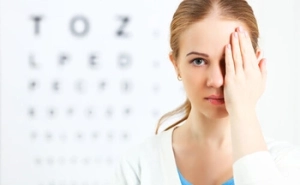 Aids help you use your sight, but protecting the vision you have still matters. Regular eye tests are the foundation, as they let your eye doctor track the disease and pick up changes early.
Between visits, many patients are asked to check their vision at home with an Amsler grid, watching for any new areas where straight lines look wavy or missing, as this can signal a change to the wet form. Knowing your risk factors helps too: age, smoking and a family history of the disease all raise the odds of developing macular degeneration, and telling relatives about a family history lets them get checked as well.
For some patients, nutritional supplements and eating for eye health are recommended, and everyday habits like wearing sunglasses against UV rays support long-term eye health. Anyone over 50, or with a family history, benefits from regular checks even before symptoms of developing AMD appear.
Considering your options at Armadale Eye Clinic
Living with macular degeneration is easier when you understand both how the disease is managed and how the right aids can keep you doing what you enjoy. At Armadale Eye Clinic, we assess your eyes, explain your options clearly, and can point you toward services that provide low vision aid support, with the understanding that what helps depends on your individual situation.
To discuss your eyes, please call us on (03) 9070 5753.
Frequently Asked Questions
Can I keep driving if I have macular degeneration?
Possibly, but it depends on how much your central vision is affected, since driving relies on it. There are vision standards for driving in Australia, and you are required to tell your licensing authority about a condition that affects your sight. Your eye doctor can assess your vision and advise whether driving is still safe for you.
Can using strong glasses or magnifiers make my macular degeneration worse?
No. Using magnifiers, reading glasses or electronic aids does not damage your eyes or speed up the disease, and there is no need to ration your reading to protect your sight. These aids simply make better use of the vision you have, so using them as much as you find helpful is fine.
Will macular degeneration lead to total blindness?
For most people, no. Macular degeneration affects central vision but usually leaves side vision intact, so it rarely causes complete blindness, and many patients continue to live independently. That said, losing central sight is significant, which is why early detection, ongoing care and the right aids all matter.
When should I contact an eye doctor urgently about my vision?
Treat any sudden change as urgent: a rapid drop in central vision, a new dark patch, or straight lines that suddenly look much more distorted can point to wet macular degeneration, where prompt treatment protects sight. If you notice any of these, contact your optometrist or ophthalmologist straight away rather than waiting for your next appointment.
Note: Any surgical or invasive procedure carries risks. Before proceeding, you should seek a second opinion from an appropriately qualified health practitioner.
References
https://ranzco.edu/news/outcomes-for-wet-macular-degeneration/
https://www.betterhealth.vic.gov.au/health/conditionsandtreatments/age-related-macular-degeneration

Multifocal intra-ocular lenses offer the opportunity to have cataract surgery and have great vision for distance, intermediate and near. There are a few golden rules Read more

We all develop presbyopia when we get to between 45-50 yeas of age. Presbyopia is the loss of the ability to focus up near. This Read more

The eye is an amazing organ with multiple parts all working together to receive light, convert it to neural signals, and send this signal onwards Read more

Unfortunately, no, long sightedness is not exactly as simple as being the opposite of short sightedness. People with long sightedness can in fact often still Read more


Leave a Reply
Want to join the discussion?Feel free to contribute!